Research
Positions & publications
Five institutions, five scholarly works, four first-authored — immunology at the bench and method development at the terminal.
Research positions
Five institutions, five stages of the pipeline
Research Intern
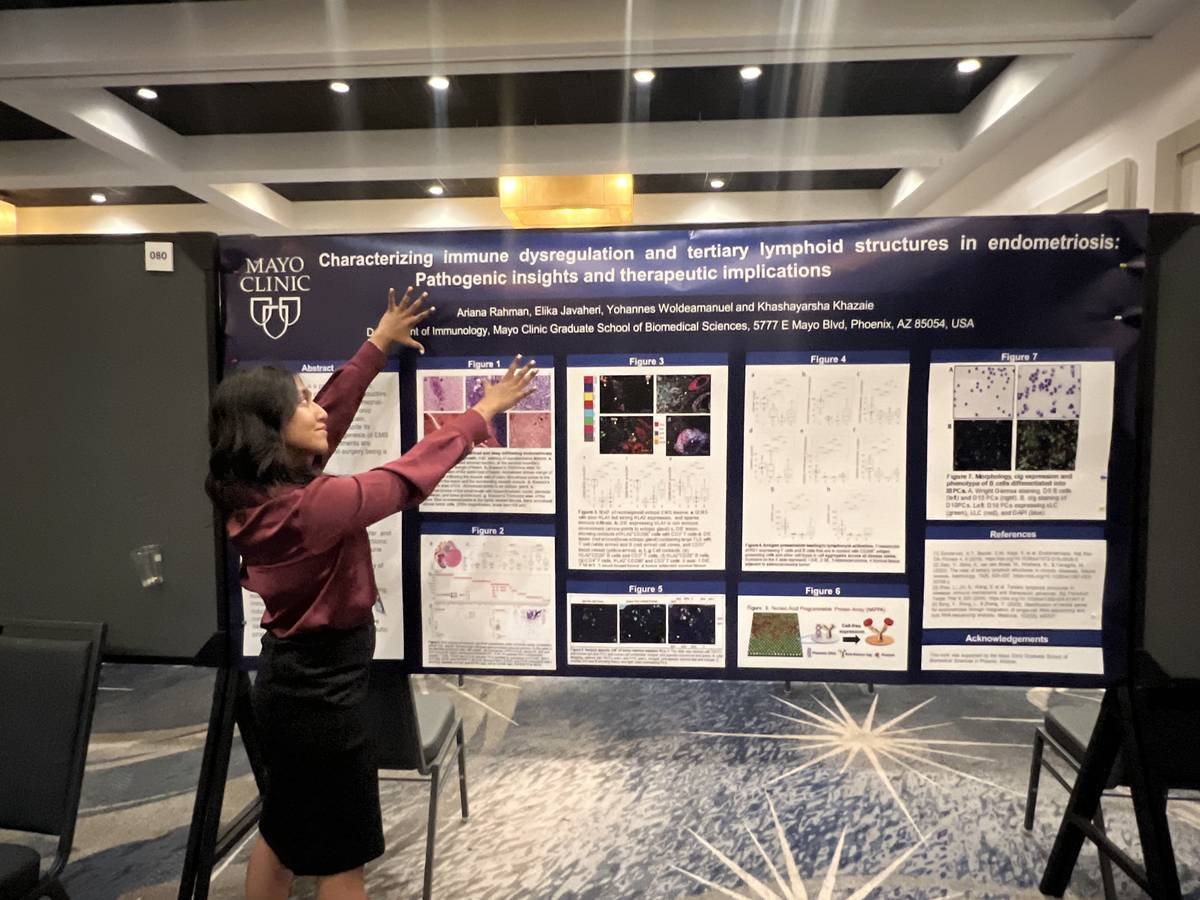
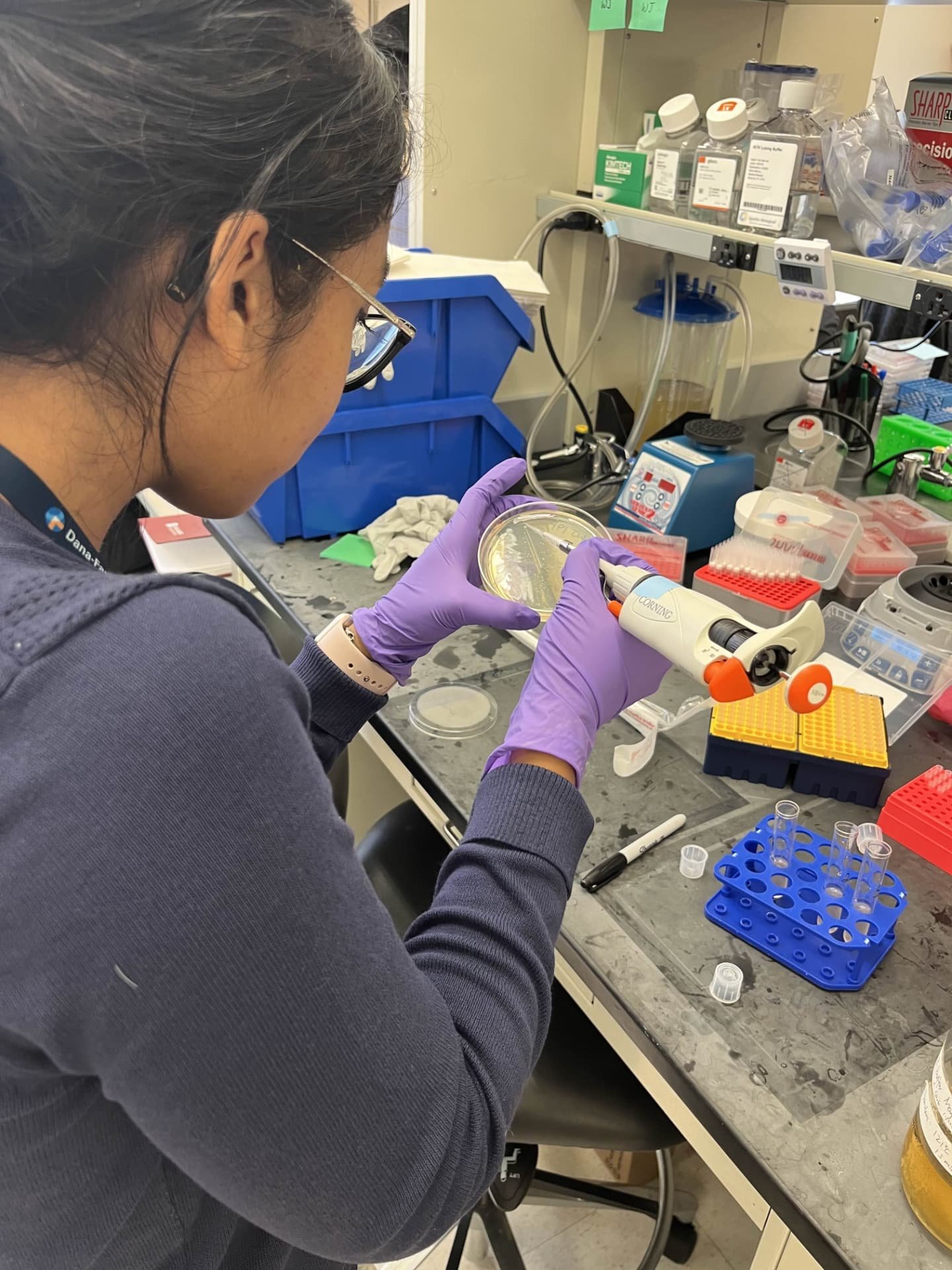
Collects freshly excised endometriotic lesions in the operating room and characterises tertiary lymphoid structures by multiplex immunofluorescence and spatial quantification. Separately built a patient-aware framework integrating RNA-seq with MRI-registered 3D biopsy coordinates, applied to 130 biopsies from 12 glioma patients.
AI in Radiation Oncology Lab
Developed GenoRefine, a deep-learning framework for single-cell RNA-seq integration, benchmarked across three multi-study datasets. Built a pan-cancer pipeline mapping immune-dysregulated ecosystems and immunotherapy-resistance mechanisms.
R&D Intern, two placements
Analysed sickle-cell trial data and built Python neural networks plus a Neo4j knowledge graph linking dosing, labs and comorbidities to vaso-occlusive crises and mortality-related variables. In 2026, supported study design for a breast-cancer medication — both sides of therapeutic development.
Research Intern
Investigated how ZAP-70 mutations affect CAR-T cytokine production and cytotoxicity, with implications for solid-tumour therapies.
Undergraduate Researcher
Developed an AI approach to predict breast-cancer recurrence (IEEE CBMS 2023) and a random-forest model to classify triple-negative breast-cancer subtypes.
Algorithm to bedside
The work spans AI and algorithm development, multi-omics and single-cell integration, wet-lab cancer immunology, patient-derived tissue and spatial analysis, and clinical-trial analytics and prospective study design.
Publications & code
Selected work
Five scholarly works, four of them first-authored — one published, one accepted, two under review.
Deep learning-based multi-omics predictor for breast cancer recurrence
Rahman A, Zhang Y, Park JG · IEEE CBMS, 2023 · published. DOI: 10.1109/CBMS58004.2023.00343
Uncovering immune-dysregulated ecosystems across cancers: a framework for drug discovery to overcome immunotherapy resistance
Rahman A, Mostafa S, Xing L, Islam T · IEEE CBMS, 2026 · accepted.
GenoRefine: a metric-guided geometric refinement framework for integrated single-cell RNA-seq embeddings
Rahman A, Mostafa S, Xing L, Islam T · IEEE Journal of Biomedical and Health Informatics · under review, 2026. Benchmarked across three multi-study datasets.
Neuroimmune interactions in endometriosis pain
Rahman A, Khazaie K, et al. · American Journal of Obstetrics and Gynecology · under review, 2026. An independent hypothesis linking lesion immune suppression, immune–sensory nerve signalling and neural sensitisation to persistent pain.
Shift work migraine disorder: a chronobiology-based meta-analysis
Woldeamanuel YW, Rahman A, et al. · Frontiers in Neurology, 2025 · published, peer-reviewed.
130 biopsies, 12 patients
Longitudinal glioma analysis separating true temporal evolution from regional heterogeneity. Preliminary analysis found greater across-surgery divergence in 10 of 12 patients (83.3%).
3 multi-study datasets
GenoRefine benchmarked across three independent single-cell datasets, built to integrate heterogeneous data without erasing biological signal.
2 AACR meetings
Endometriosis immune architecture (AACR IO 2025) and endometriosis as a neuroimmune disorder (AACR IO 2026), plus cancer-equity work at the Arizona Health Equity Conference.